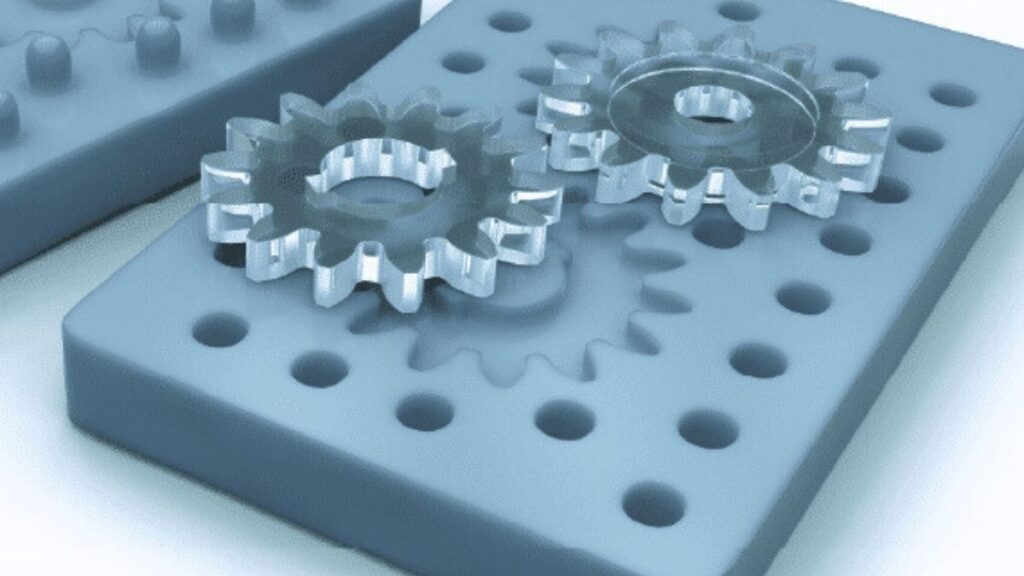
Urethane casting (also called cast urethane or polyurethane casting) uses silicone molds to create high‑quality plastic parts from master patterns. It’s a great choice when you need production‑like parts, fast, without the cost and lead time of hard tooling.
Urethane casting is often a cost-effective alternative to injection molding. Parts can mimic common engineering plastics and elastomers with smooth finishes suitable for functional testing, demos, and bridge production.
What is Urethane Casting
Ideal For?
Functional prototypes that must behave like end-use plastics or elastomers
Low- to mid-volume production when hard tooling isn’t justified
Complex geometries and more accommodating DFM guidelines when compared to injection molding
Programs in regulated industries that require documentation and predictable outcomes
Common Applications
Bridge Production
Functional End-Use Parts
Low-Volume Production
Pilot Program for User Testing
Large Cosmetic Parts
Sales Samples
At a Glance: When to Choose
Urethane Casting vs. Other Processes
If another process is better for your goals, we’ll recommend it. We are process-agnostic and application-first, so you can stick
with one vendor when plans change.
Choose urethane casting when you need a lower upfront cost, faster start, frequent design changes, and volumes below typical tooling ROI.
Choose urethane casting for organic shapes, uniform thin walls, molded-in details, or multiple cosmetic parts where machining time is high.
Choose urethane casting when you need injection-mold-like appearance and feel, production-like urethane properties, and smooth surface finish off the tool.
All Urethane Casting is coordinated through A3D’s qualified supplier network.
Lead Times
3-4 weeks
Max Part Size
36 × 36 × 18 in (900 × 900 × 450 mm)
Volumes
Best for prototypes and low‑ to mid‑volume runs
Mold Type
Silicone tooling is produced by our casting partner from a master pattern, which may be CNC-machined or 3D-printed (3D-printed patterns can be produced in-house at A3D). Tools are stored for repeat orders up to 2 to 3 months.
Materials
Clear PC-like (capable of high polish & clarity)
PP-like
TPU (elastomeric)
ABS-like
UL 94-V0 ABS-like
PC-like
High-temp PC-like
Silicone rubber
Finishes
ABS-like
UL 94-V0 ABS-like
PC-like
High-temp PC-like
Silicone rubber
Clear PC-like (capable of high polish & clarity)
PP-like
TPU (elastomeric)
Materials Available Through Our Supplier Network
Urethane Casting Materials
Clear PC-like (capable of high polish & clarity)
PP-like
UL 94-V0 ABS-like
TPU (elastomeric)
ABS-like
High-temp PC-like
Silicon Rubber
Finishing Options
Matte
Glossy
Polished Clear
Painted Color
Tinted Color
Quality & Compliance
AS9100 • ISO 9001:2015 • ITAR Registered
A3D is ISO 9001:2015 and AS9100 registered and ITAR registered. These certifications cover A3D’s additive manufacturing, assembly, finishing, and supplier sourcing activities. Cast Urethane parts route through our Phoenix headquarters for final QA before shipment, and supplier qualification is governed by our QMS.
Startups: scalable production without new vendor risk
Supply Chain: traceability, documentation, and consistent delivery from a single accountable partner
Common Urethane Casting FAQs
What tolerances can you hold?
Typical accuracy through our urethane casting supplier network is ±0.015 in (±0.38 mm), dependent on geometry, wall thickness, and material. Achievable specs are confirmed during DFM review.
What’s the typical lead time?
Most urethane casting programs run 3 to 4 weeks, with timelines depending on part size, quantity, and finish requirements.
What’s the maximum part size?
Our max part size is up to 36 × 36 × 18 in (900 × 900 × 450 mm) per part. Larger builds may be segmented and bonded. If the size of your part is a concern, contact us and we will review your project with you.
Which materials are available?
We offer ABS‑like, PC‑like, clear PC‑like, PP‑like, TPU, and silicone rubber urethanes. Tell us the performance you need (such as impact, flexibility, clarity, and temperature) when you request a quote, and we’ll match a formulation.
Can you match colors or textures?
Yes. Provide Pantone or RAL targets and cosmetic expectations. Tinted urethane provided by our casting partner typically yields a near match, and paint or dye finishing performed in-house at A3D can match more precisely. Custom finishes are available on request.
How many parts can be produced from one mold?
Silicone molds in our supplier network yield up to 20 parts per tool, depending on geometry and material used.
How do I request a quote?
Upload STEP/IGES/Parasolid/SOLIDWORKS files with quantities, timeline, and any finish or compliance notes. Our team will provide an application‑first recommendation to get you started.