In the latest installment of his Wall-E build series, botbuilderdave tackles one of the most mechanically complex parts of the project: Wall-E’s arms — wrists, shoulders, fingers, and thumbs included. It’s the kind of subsystem where small failures cascade, and this video is a great look at how Dave problem-solved his way through it, with help from a key manufacturing partner.
What He Built
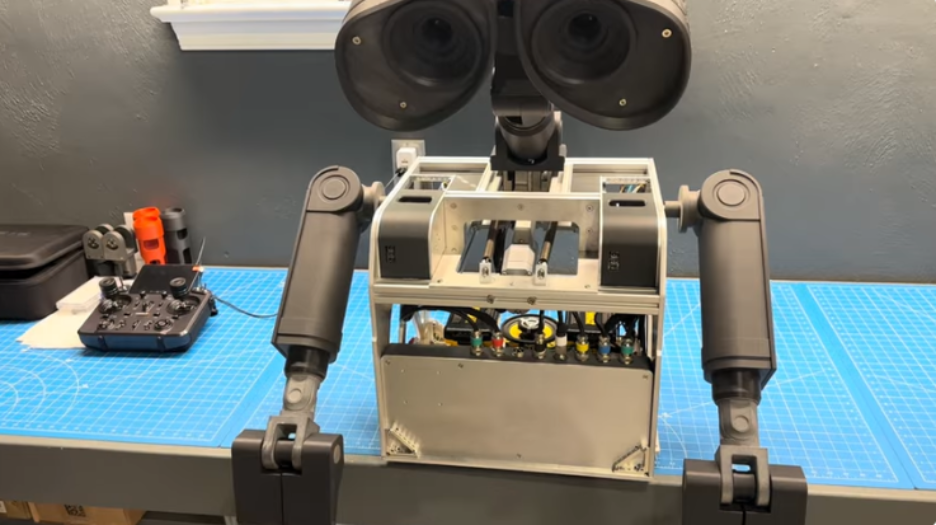
Dave engineered a fully articulated arm assembly for a screen-accurate, life-size Wall-E robot. Each arm features:
- Five independent servos per arm — Reef 179 micro servos for the fingers, and a Reef 55 micro for the thumb, plus dedicated servos for wrist rotation and shoulder pivot
- Modular magnetic finger covers so the servos underneath stay easily accessible for maintenance and swaps
- A rotating wrist driven by a servo block that engages a gear at the shoulder
- Iglidur slip-ring bearings and PTFE washers for smooth motion at the pivot points
- A clean wiring harness routed through a four-channel PCB inside the forearm (with a fifth channel added for this iteration)
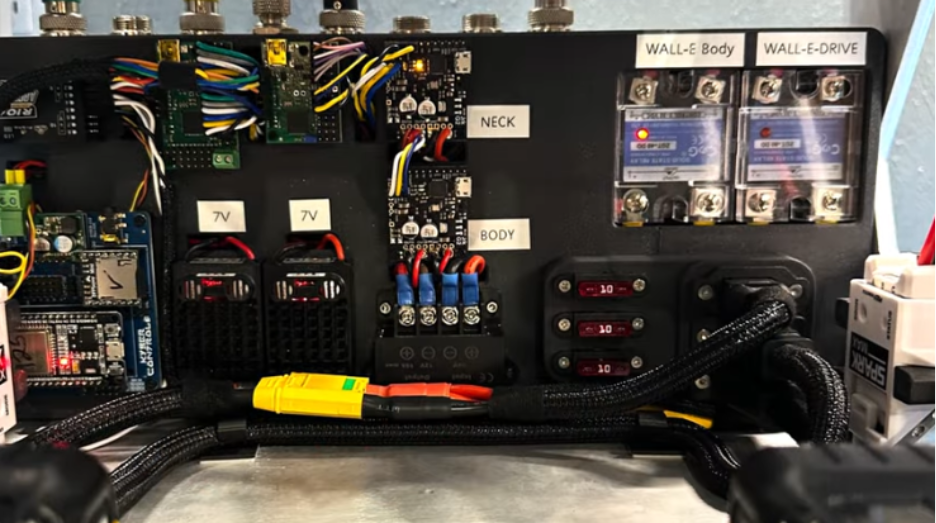
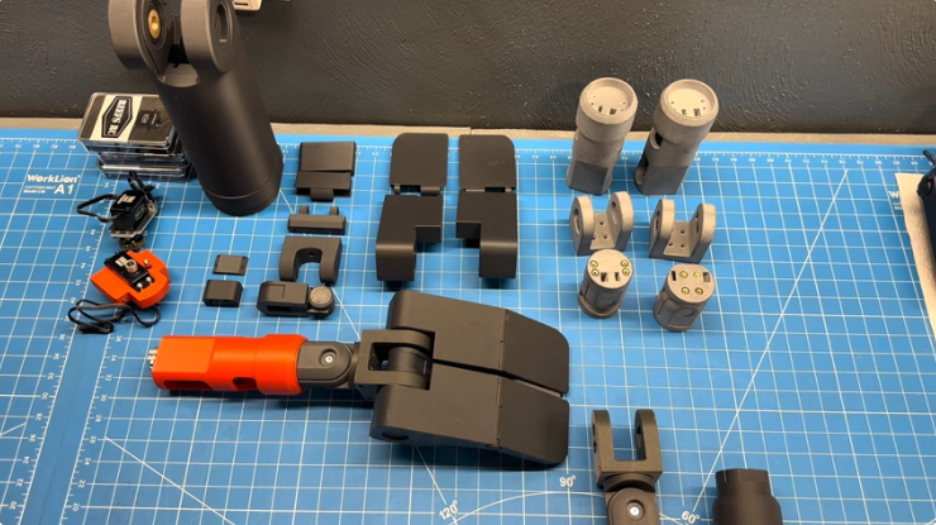
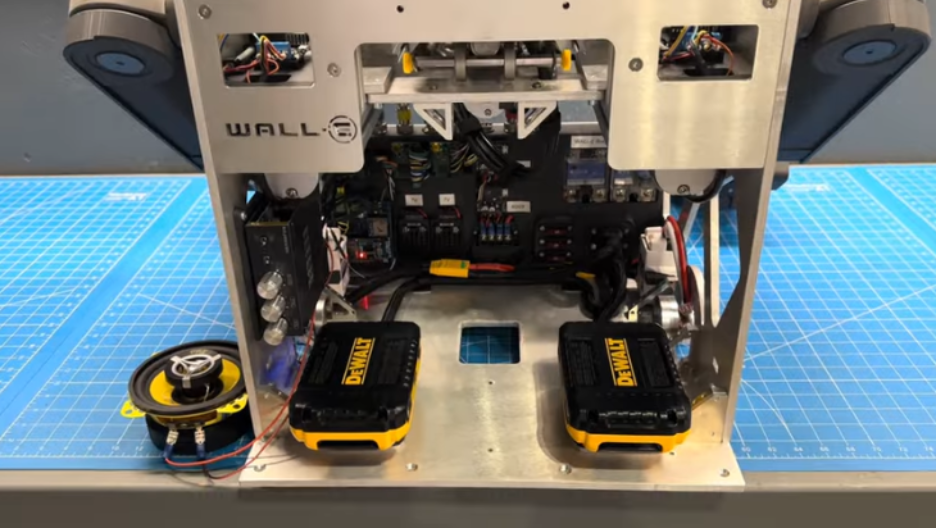
The arms slot into the chassis via a clamp-down system that lets the whole assembly drop in, get tucked behind the body door (held shut with magnets), and be serviced again later without rebuilding anything.
Beyond the arms, the video also shows off Wall-E’s broader systems: a two-battery setup (one for logic, one for drive motor speed controllers), three buck converters powering the servos and linear actuator independently, solid-state relays with individual fuses, a linear actuator for body tilt with gas shocks for damping, and Kyber smoothing on the servo motion so movements look natural even in loud convention or school environments. Dave demos pre-programmed sequences — a “ta-da” pose, fist bumps, high fives, finger waves — all running off his custom control and sound system.
Why He Built It
Dave’s mission with this project is simple: inspire other makers to build their own Wall-E and “live the dream.” He’s been documenting the entire build openly so anyone following along can learn from both the wins and the failures. He takes Wall-E to cons, schools, and hospitals, which is part of why the smooth, quiet motion matters so much — the robot needs to be expressive in noisy, crowded environments where kids and fans can interact with him.
The Part-Failure Problem (and Why A3D Matters)
This is where the story gets interesting. The original wrist part was designed as a single 3D-printed piece, but it broke when Dave tipped it off a table. The layer lines weren’t bonding well. He bumped print temperatures up 10–15°C, redesigned the wrist as three separate parts oriented for stronger layer alignment, and that held up to drop testing — but the assembly was getting complicated.
Then at 3DEXPERIENCE World in Houston, Dave and fellow builder Seth Kelly (@helmetstudio) brought Wall-E along to share the project. That’s where they met Michael from A3D Manufacturing, who saw the wrist issue and offered to help.
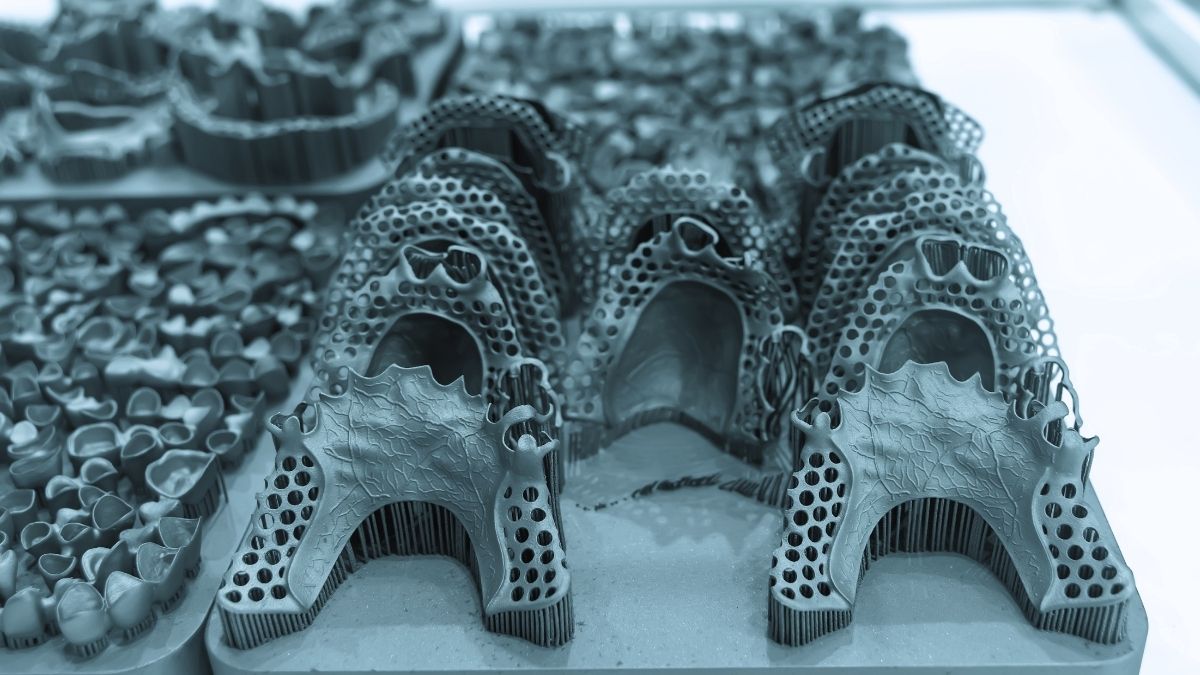
A3D’s solution: take those three separate printed parts and consolidate them back into single, solid pieces using Multi Jet Fusion (MJF) with PA6 glass-fiber-filled nylon. The redesigned wrist came out as a unified solid component with all the engineering features — heat-set inserts and all — already built in. No more layer-line weakness. No more drop-test failures. The orange piece in the assembly is glass-fiber nylon from Bambu, but the critical structural pieces are A3D’s MJF parts.
Dave was clear in the video: this was not a sponsored partnership — A3D stepped up because they genuinely wanted to help the project succeed.
About A3D Manufacturing
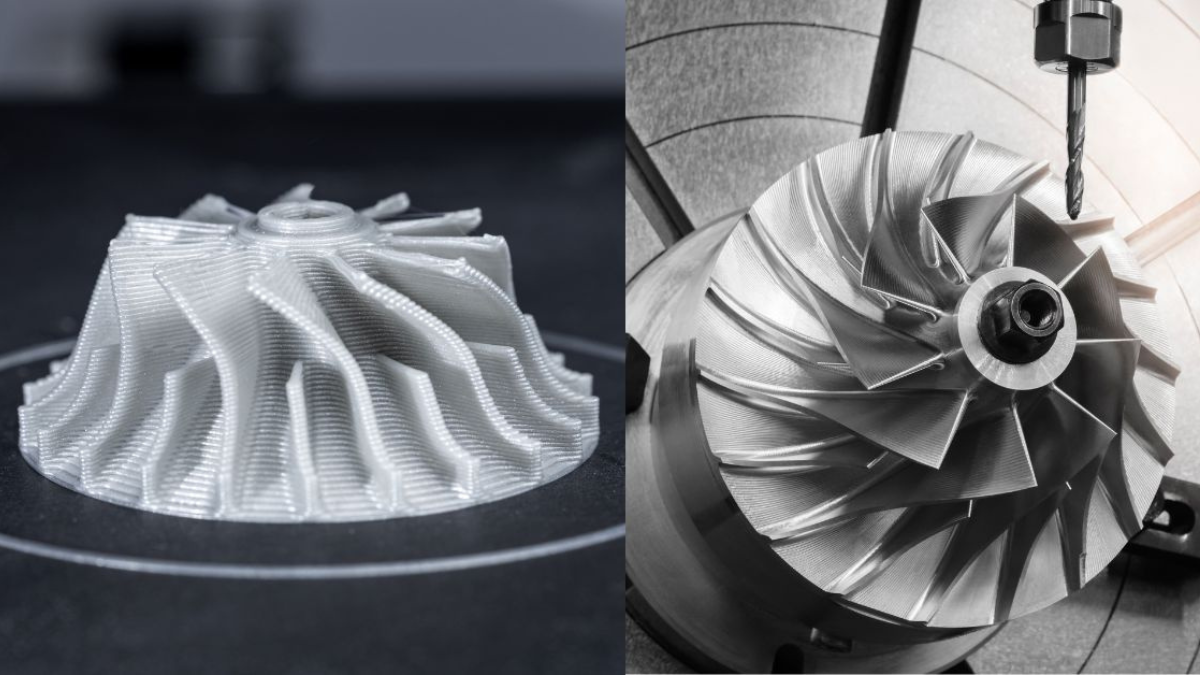
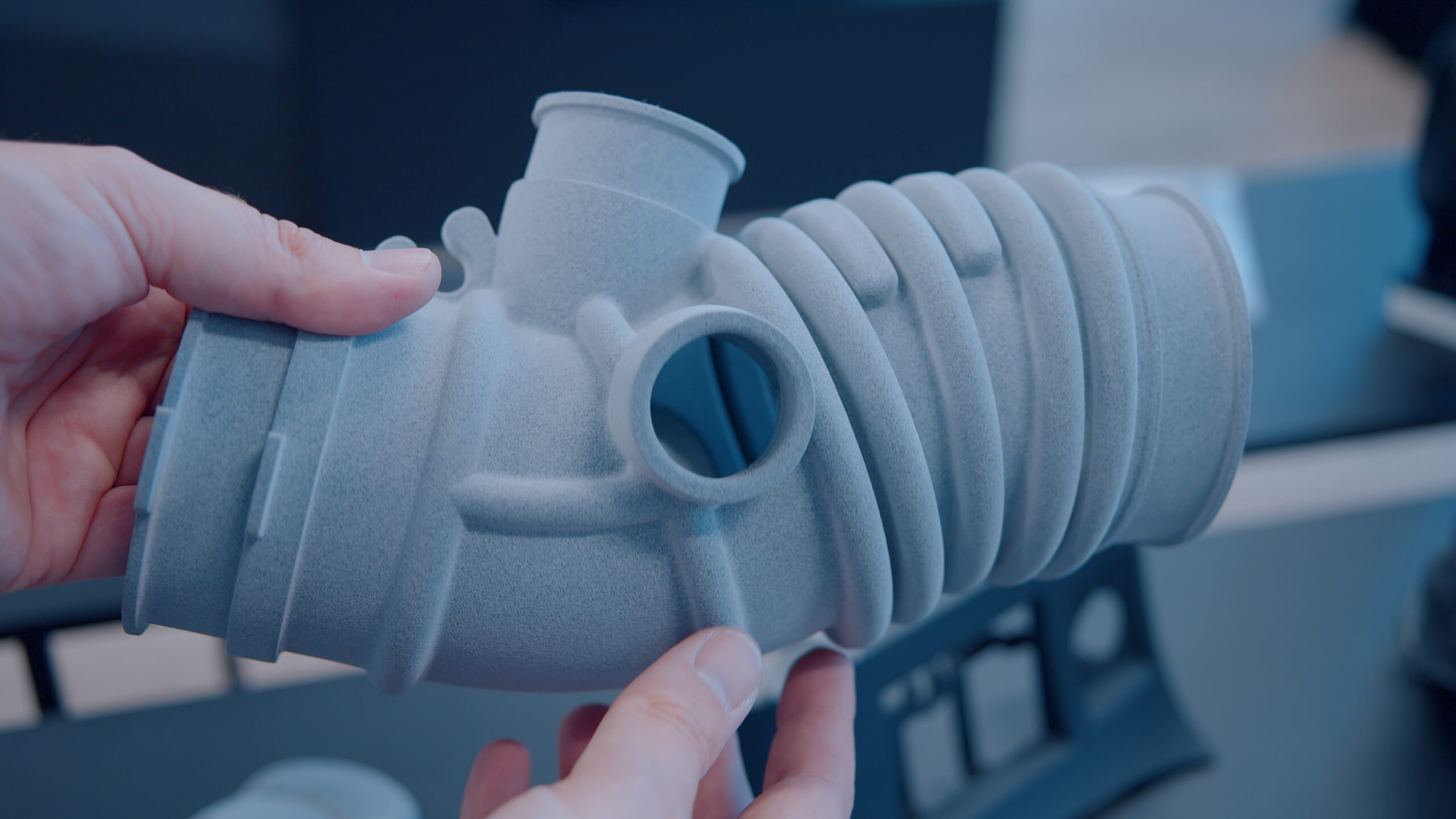
A3D Manufacturing is an ISO 9001–certified digital manufacturing company headquartered in Phoenix, Arizona (with operations in Tempe), specializing in Multi Jet Fusion 3D printing alongside CNC machining, injection molding, urethane casting, and 3D scanning. Their MJF process fuses nylon powder layer-by-layer with infrared energy, producing parts with isotropic mechanical properties, fine feature resolution, and excellent surface finish — exactly what a project like Wall-E needs when a part has to survive drops, repeated assembly, and live demos in front of crowds.
A few things that make them a strong fit for builder projects:
- Instant online quoting at a3dmfg.com for fast turnaround
- In-house materials science engineers who’ll help optimize part orientation, material choice, and design-for-manufacturing — exactly the kind of guidance that solved Dave’s wrist problem
- End-to-end services from prototype through low-volume production
- Parts route through their Phoenix HQ for final QA before shipping
For makers, engineers, and creators working on anything from one-off prototypes to production runs, A3D’s MJF capability is especially valuable when FDM prints just aren’t strong enough — which is exactly the wall Dave hit on the wrist.
How to Reach A3D
- Website & instant quotes: a3dmfg.com
- Phone: (480) 454-5037
- Email: [email protected]
- Phoenix HQ: 15220 S 50th St, Suite 105, Phoenix, AZ 85044
Follow the Build
Dave mentions this is the last video in the build series — finished beauty shots of Wall-E are coming next. If you’ve been following along and want to build your own, his YouTube channel is the place to start, and A3D is the partner who can get your tricky structural parts printed strong the first time.
About Potentium Design
Based in Suffolk, Virginia, Potentium Design is botbuilderdave’s custom robotics and product design studio. Dave specializes in bringing complex, screen-accurate animatronic builds to life — from initial CAD and design-for-print engineering through electronics, control systems, programming, and on-site demos. His work spans the full stack of a build: mechanical design, servo and linear-actuator integration, custom PCBs, power and sound systems, RC transmitter programming, and motion smoothing for natural-looking performance.
If you’re interested in commissioning a custom robot build, collaborating on a project, or just want to follow along with the Wall-E series and what’s next, reach out through Potentium Design.
🌐 Website: potentiumdesign.com 📍 Based in: Suffolk, VA 📬 Contact: Via the contact form on potentiumdesign.com (24-hour response) or social media.